AuthorLyn Chimera is a Master Gardener, consultant and lecturer. Archives
May 2023
Categories |
Back to Blog
Thoughts on Spring Improvements3/31/2022 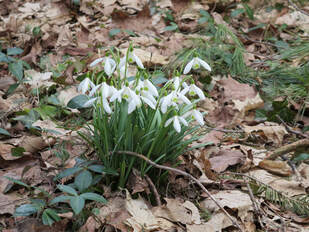 Thoughts on Spring Improvements
By: Lyn Chimera Who doesn’t look forward to spring? It’s not just because it means the cold and snowy weather of winter is behind us. Spring’s reawakening is natures promise that life goes on. How wonderful it will be to see the first daffodils and crocus. Spring is the season for optimism. To me spring is almost like the New Year, time to make resolutions for improvement in my gardens. Lots of us are planning what to add, remove or change. There is so much in the news about pollinator, songbird, and insect decline along with climate change why not make improvements this spring that can help alleviate these problems. I recently attended the annual Ithaca Native Landscaping Symposium (via Zoom). The major focus of the Symposium was what the average homeowner can do to help support not just pollinators but other beneficial insects, birds, and nature in general. The number one thing you can do is stop using insecticides/pesticides. First, there is no insecticide that only kills the bad guys. Any insect that eats that pant or gathers its pollen or nectar will be affected. Since over 90% of the insects in our gardens are beneficial just the thought of killing all insects is counterproductive. Beneficial insects not only pollinate but help control harmful insects by eating or parasitizing them. Since I stopped using pesticides, at least 30 years ago, my gardens are a buzz with beneficials, and I have very little problem with the bad guys. When the Japanese beetles arrive, I knock them into soapy water and that really helps. Improving soil is the key to healthy plants. Chemical fertilizers, the ones you mix in water, may feed the plants but are harmful for the soil. People don’t realize it, but healthy soil is full of life from worms and bugs you can see to billions of microscopic creatures you can’t see. It’s the soil life, its decomposition and excrements, that provide nutrients for plants. Think about it…no one “feeds” the soil in the meadows and woods and those plants grow very well. So, what can you do? Add organic matter instead of chemical fertilizers. Compost is the best way to improve your soil’s nutrition and texture. Compost is filled with microbial life which will inoculate your soil. It’s easy to add a little to every planting hole. About 1/3 compost with 2/3 of the existing soil is a good ratio. Compost can also be used as a mulch. It’s not necessary to work it into the soil. Simply leave it on the top as a mulch would be and nature will take care of distributing the nutrients. Compost is the best thig to add to clay soil. In fact, there is nothing in your gardens that can’t be helped by using compost. When the plants are healthier, they are more resistant to insect and disease problems. You can make your own compost or purchase it bagged or by the yard from local nurseries. If purchasing bags read the ingredients and make sure it doesn’t contain topsoil or anything else as filler. When purchasing from a nursery ask about the ingredients. Compost should never be smelly. If it is, don’t buy it. Leaves are another excellent soil amendment. After a few years of using compost as mulch I now just use mulched leaves that I gather in the fall. It’s the best mulch and it’s FREE! Another important thing you can do to support nature is plant native plants. The connection between plants that evolved in our area to the beneficial insects, birds and animals that also evolved here is crucial for a productive habitat. Not only do native pants provide pollinators with the nectar they need they serve as host plants for the larva of beneficial insects including butterflies. Don’t think you have to rip out your nonnative plants and start over. If you need a plant for a spot or are replacing one that died, look for a native that’s right for that site. Here comes the tricky part. Most “natives” found in nurseries have been hybridized for color, size, or other features to please gardeners. Often, they no longer provide the food native insects and birds need because they are sterile. When buying a native look up the botanical name and ask for that. If there is a common name after the botanical name that means, it’s a cultivar. There are nurseries that sell the true species so ask for them. The more people request the true species the more nurseries will carry them. If you have trouble finding a plant, check online but always try local independent nurseries first. Happy Gardening!
0 Comments
Leave a Reply. |
 RSS Feed
